History of BSA Cars "The Thirties"
Rear-Wheel-Drive cars (1933 to 1936)
BSA's next RWD car came in 1932 and whilst designed and produced at Small Heath did have
similarities to the small Lanchesters, then being produced by the BSA group. For 1933
rear wheel drive car with 1185 cc engine. At that time Daimlers had 6 or 12 cylinder
engines and the only 4 cylinder Lanchester had a 1203 cc engine (presumably not very
different to the later 1203 cc Scout engine).
These BSA's were produced on a Lanchester theme but the similarity was only superficial
as wheelbase, gear box ratios, wheel size and other items were different.
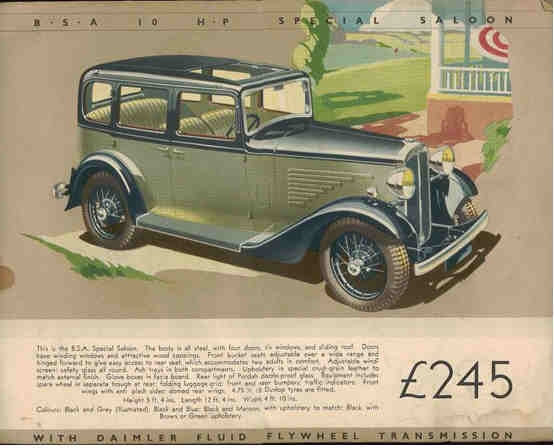
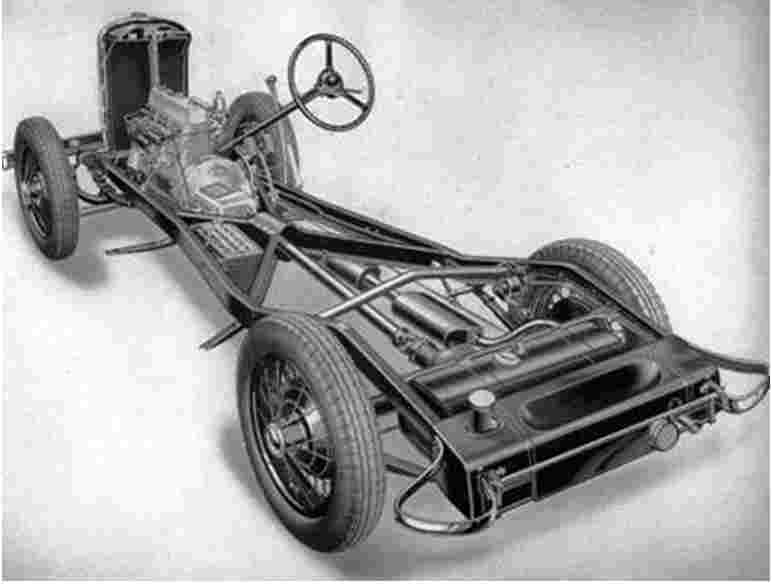
For 1933 the RWD BSA cars were a 10 hp tourer and a 10 hp saloon on an 8' 14"
wheelbase, both fitted with the fluid flywheel system of transmission. Chassis
numbers started at D1Ol and engine numbers had a T prefix, presumably also
starting at T1O1. Look at the T9 page and you'll see that the FWD T9 chassis
was offered as an alternative to the fluid flywheel chassis. Like all of the
FWD cars, the T9 models were substantially cheaper that the RWD cars.
For 1934 the RWD range was expanded to include a standard saloon plus Delux
version, Varsity saloon, Tickford Drophead foursome saloon, Peerless coupe
(by Coventry Motor Sundries) and a Tickford three seater. The last named
looked very sporty, but presumably with fluid drive lag sprints were out
of the question. The engine was tuned by N A McEvoy and the body built by
Jensen's of West Bromwich and was dubbed the Alpha Beta due to its Alpha
like appearance. The basic saloon had a steel body, whilst the De Luxe
version was coach built, as was the Varsity saloon and all featured the
1185 cc engine.
For 1935 there were some changes, the most significant being the
introduction of a six cylinder engine (what other companies were
building 2, 4 & 6 cylindered cars at the same time!?) This engine was
1378 cc OHV with integral cylinder and head arrangement with a four bearing crank.
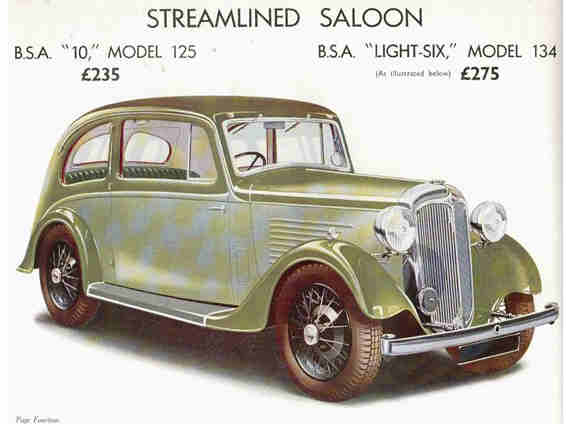
Of 1300 cc capacity The Streamlined saloon might have looked impressive but it had the
same performance as other vehicles in the range. The six-cylinder engine may
have sounded more powerful but it only had a capacity of 1300c.c.
And so it went on, or did it? For 1936 the range was unaltered with the exception of
a 4 cylinder 1330 cc engine on some models, but with a massive reduction in price.
All six cylinder models were reduced at leat £40 and all four cylinder cars by at
least a whopping £80.
This obviously was the writing on the wall and in the spring of 1936 production
ceased for all models, including our three wheelers, with the exception of the
Scout. After this date BSA cars were restricted solely to the FWD Scout in various
forms and the fluid flywheel market was left exclusively to more expensive Daimler
and Lanchesters.
So ended the production of BSA RWD cars. Post War saw the BSA group centralising
car production on the Daimler and Lanchester companies and a move away from the low
cost towards the medium and high cost market.